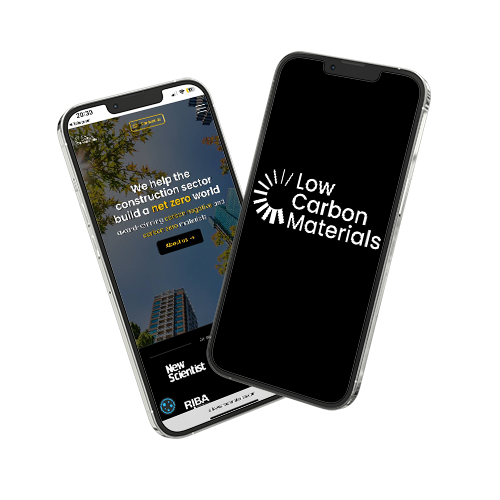
Adopter designs and builds websites for deep tech and climate adaptation companies, with a focus on four sectors: biotechnology, nature finance, built environment, and energy tech. Projects include discovery, messaging, copywriting, design, development, analytics setup, and a 12-month technical support warranty - including all website copy, which Adopter writes as part of the project. Website content is written for the audiences that evaluate these companies most closely - investors, enterprise procurement teams, government stakeholders, and research partners. Adopter sets up detailed analytics for every website, including tracking which companies visit the site and which pages they view. Most projects run 8-12 weeks, with a total client time commitment of 10-15 hours.
%20Firefly%20Upscaler%202x%20scale_converted.avif)


A new generation of markets is emerging that generates nature-specific revenue streams. While it is good that nature’s value is being promoted by such developments, there are growing concerns as to their negative impacts. The unchecked monetarisation of nature could lead to its further depletion and damage. For example, unintended consequences could arise from an over-emphasis on markets predicated on one measurable metric (say, carbon reduction or offsets) while missing and negatively impacting other aspects of biodiversity. Nature markets could be responsible for yet another historic round of inequitable outcomes, and could contribute to worsening climate change. The Taskforce on Nature Markets has been established to shape these new nature markets in a way that protects and regenerates nature, ensures prosperity of nature's stewards - local and indigenous people, and contributes to meeting the climate goals.
Nature markets come in many shapes and forms. We propose a three-way classification of nature markets that are a work-in-progress and likely to evolve over time.
- Intrinsic nature markets concern first and foremost the trade of nature itself. These markets include embedded nature markets eg. the nature value of tourism.
- Offset nature markets concern investments and/or trade in aspects of nature to offset a negative impact elsewhere. These markets include carbon-linked nature markets.
- Derivative nature markets concern markets that trade instruments that reflect the value of nature embodied in the underlying economic assets and enterprises. Examples are financial instruments and markets that consider nature-related risks.
Read more about the Nature Markets in the 'What are Nature Markets' part of the Future of Nature Markets white paper.
Nature markets come in many shapes and forms. We propose a three-way classification of nature markets that are a work-in-progress and likely to evolve over time.
- Intrinsic nature markets concern first and foremost the trade of nature itself. These markets include embedded nature markets eg. the nature value of tourism.
- Offset nature markets concern investments and/or trade in aspects of nature to offset a negative impact elsewhere. These markets include carbon-linked nature markets.
- Derivative nature markets concern markets that trade instruments that reflect the value of nature embodied in the underlying economic assets and enterprises. Examples are financial instruments and markets that consider nature-related risks.
Read more about the Nature Markets in the 'What are Nature Markets' part of the Future of Nature Markets white paper.
Nature markets come in many shapes and forms. We propose a three-way classification of nature markets that are a work-in-progress and likely to evolve over time.
- Intrinsic nature markets concern first and foremost the trade of nature itself. These markets include embedded nature markets eg. the nature value of tourism.
- Offset nature markets concern investments and/or trade in aspects of nature to offset a negative impact elsewhere. These markets include carbon-linked nature markets.
- Derivative nature markets concern markets that trade instruments that reflect the value of nature embodied in the underlying economic assets and enterprises. Examples are financial instruments and markets that consider nature-related risks.
Read more about the Nature Markets in the 'What are Nature Markets' part of the Future of Nature Markets white paper.
The ambition of the Taskforce on Nature Markets is to establish the framework for building principles-based nature markets. The programme of work will seek to map existing and emerging approaches and experience, build awareness of opportunities and risks, grow a community of practitioners, encourage innovations and innovative people, advance supportive governance arrangements and create pathfinder initiatives to scale the implementation of recommended approaches and prototypes. Effectively implementing such a work programme would enable the Taskforce to contribute to the development of nature markets fit for the 21st century and beyond.
The Taskforce on Nature Markets is guided by leaders and knowledge partners drawn from policy, legal and governance, academia, market, technology, civil society and indigenous communities.
You can find more information about the sectors and communities involved with the TNM on the Taskforce Members and Knowledge Partners pages.
The Taskforce work serves two principles: a nature positive outcome and supporting shared and sustainable prosperity for the stewards of nature including local and indigenous communities. In addition, we are committed to transparency, accountability, inclusion and impact. The process will aim to deliver policy and market interventions with solid governance for both public and private actors. We believe in empowered citizens and communities, and markets that can place nature and equity at the core of our economic activity.


Every project includes a 12-month technical support warranty covering bugs, fixes, and adjustments. Beyond that, your website will keep evolving alongside your company - new messaging, new pages, landing pages for campaigns. Some clients handle ongoing updates themselves. Others keep us involved for speed and continuity. It's entirely up to you, and the setup works either way.
Most clients spend 10-15 hours total across the project. That breaks down to 2-3 hours of discovery interviews upfront, then reviewing wireframes, copy, and design as the project progresses. We bring everything to you ready for feedback - you steer the direction, we do the production. We typically check in every 1-2 weeks, with more contact around content review and launch.
Yes. We optimise every page for AI search tools like ChatGPT, Perplexity, and Claude, as well as traditional search engines. In practice, that means writing content that directly answers the questions your buyers are asking, structuring it so AI models can extract and cite it accurately, and adding schema markup that helps those models understand your company. The approach is known as GEO or AEO - we build it into every website project as standard.
It's built into every site from the start. We structure pages for search visibility, write content around the terms your buyers are searching for, and implement the technical foundations - metadata, schema markup, site structure - that help your pages rank. If you want ongoing SEO support after launch, that's something we can continue as part of the relationship.
Both. If your site still works but the messaging no longer reflects where your company is, a refresh is usually all you need. If you've outgrown the site entirely - unscalable platform, unclear structure, messaging written two funding rounds ago - a full rebuild likely makes more sense. If you're not sure which you need, a 20-minute call with a member of our web team is a good place to start.
Yes. We build every site so your team can edit text, publish blog posts, and update images independently. We train your team as part of the launch process so you're comfortable from the start. You can also create new pages using existing templates or build them from scratch - however, most clients come back to us for those. Beyond that, it's up to you how much you want to manage yourself and how much you'd rather we handle on an ongoing basis.
No. We write the website copy as part of the project - it's one of the things clients tell us they value most, because it removes the single biggest bottleneck in most website builds. We interview your team, research your market, and draft the copy. If you have existing content, drafts, or a messaging framework, we'll use those as a starting point rather than starting from scratch. You review it and tell us what needs adjusting. Your job is knowing your business. Ours is finding the right way to communicate it.
Webflow for most projects, but we also build on WordPress, Wix, and Squarespace. The recommendation depends on how independently your team wants to manage the site, what tools you need it to connect with, and whether you have an existing platform you'd rather stay on. Most clients choose Webflow because they can update pages, publish posts, and add content without needing a developer. If another platform makes more sense, we'll tell you.
Most website projects fall between £5,000 and £20,000. An early-stage company that needs a one-page site to look credible for investor conversations will be toward the lower end. A scaling company entering new markets or targeting specific organisations will need more - pages for different audiences, case studies, a blog, campaign landing pages. Copy, design, and development are typically included as standard. We quote every project before work begins so you know exactly what you're investing.
Most projects run 8-12 weeks from kickoff to launch. That's typical for a scaling company that needs clear messaging, multiple audience pathways, and content like case studies, a blog, and landing pages for targeted campaigns. Early-stage companies preparing for a funding round or product launch can have a working site in 4-6 weeks - we start with the highest-impact pages and add sections as the company grows. Larger organisations with complex stakeholder landscapes or extensive content requirements typically run 12-16+ weeks. We shape the process around your stage and what you're working toward.